
If you enjoyed Those Italian Girls, consider the romance novels below

Updated: Oct 3
JUST TO BE CLEAR... this is not a competition; the following reviews aim to bring a structured consistency of comparison and balance to promotional hype.
First, the SCORE CARD evaluates Resolution & Outcome , Harmful Content, Emotional Resonance, and Setting & Escape. In each case.
This is followed, again in each case, by a BRIEF REVIEW of another set of criteria: Plot & Pacing, Writing Style & Readability, and Characterisation & Relevance.
The Final Verdict suggests who will like the book and who should skip it.
Furthermore, since they are generated by AI, it is hoped they are absent of human bias.
A FINAL WORD... as an "indie author", of a dozen or so novels on Amazon, John Morey is aware that his placements and listings - even how and where his titles are categorised - are pretty much out of his control. Subsequently they may be displayed alongside books with storylines that are totally different from his own.
They are often not 'Products related to this item', as claimed, below the details for Those Italian Girls. (Judging by their covers, you'll see what I mean!)
This can be misleading for you, the reader, which is one reason for trying to improve relevance - relevance of your next read to match what you are looking for.
Hence the reviews offered in the style and format below, hopefully more 'honest'.
You should also be aware that, if you buy any of these books by following its Amazon link, you are supporting an "indie author" (John Morey) as he may earn a small commission from the sale, but at no additional cost to yourself. Thank you.
Evaluation of The Venice Sketchbook by Rhys Bowen
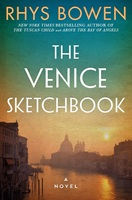
1. SCORE CARD
Resolution & Outcome 8 / 10 Highly Satisfying.
The dual-timeline narrative wraps up with full closure. Juliet’s long-hidden wartime secrets are completely unearthed via her diary and left-behind tokens, providing an immense sense of vindication. For the modern protagonist Caroline, fulfilling her aunt's final wish acts as a catalyst to heal from her divorce and regain her personal agency.
Harmful Content 7 / 10 Clean with Moderate Wartime Shadows.
It is a "cleaner" mainstream read with very minimal profanity and no explicit or gratuitous sexual content (romance is kept tender and historical-trope driven). However, it loses points because it details the grim realities of World War II, including the brutal German occupation of Italy and the rounding up of Jewish citizens.
Emotional Resonance 7 / 10 Tender and Moving.
The novel captures the deep heartache of an impossible, star-crossed love strained by aristocratic expectations and global conflict. While some readers note that the modern 2001 timeline feels a bit less emotionally intense than the wartime era, the overall thematic elements of maternal sacrifice and lifelong devotion pack an emotional punch.
Setting & Escape 10 / 10 Flawless Transportive Power.
This is the book’s greatest triumph. Rhys Bowen uses her extensive personal history with Venice to paint the city vibrant, sensory strokes—from coffee in St. Mark's Square to the shifting light over faded canals. It is a masterful mental vacation that naturally invites readers to reflect on how unexpected life changes shape one's path.
2. BRIEF REVIEW & READER'S GUIDE
Plot & Pacing
The book employs a split-tempo dual timeline that shifts focus between Juliet’s life spanning 1928 to World War II, and her great-niece Caroline’s life in 2001. The pacing starts as a leisurely, romantic slow-burn during Juliet's early art school years in Italy. However, once the shadow of WWII approaches and the timeline transitions into wartime espionage and survival, the tempo accelerates into a propulsive, page-turning mystery as Caroline pieces together the clues left in Juliet’s sketchbook.
Writing Style & Readability
Rhys Bowen’s prose is highly accessible, fluid, and visually descriptive. She strikes a perfect balance, avoiding overly dense historical jargon while managing to vividly anchor the reader in both the post-9/11 distress of the early 2000s and the tense atmosphere of Fascist Italy. The readability is incredibly high, making it a smooth, engaging read that can easily be devoured over a weekend.
Characterisation & Relevance
The characters are driven by relatable, classic archetypes that evolve through extraordinary circumstances. Juliet transitions from a wide-eyed, naive young artist into a resilient, fierce survivor who makes immense sacrifices for those she loves. Caroline mirrors this journey in the modern timeline; she starts out feeling passive and broken by a collapsing marriage, but grows into her own power through her connection to Juliet's past.
Final Verdict
Who will love this book:
Enthusiasts of sweeping historical fiction, lovers of Italian travel-escapism, and anyone who enjoys family-mystery novels centred around old secrets, diaries, and hidden keys.
More details with option to buy, here...
Who should skip it: Readers looking for a deeply gritty, politically complex, or heavily detailed military history of World War II. The history here serves primarily as a atmospheric backdrop for a personal romance and mystery.
Evaluation of The House in Amalfi by Elizabeth Adler
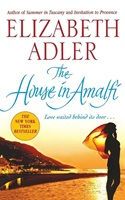
1. SCORE CARD
Resolution & Outcome 8 / 10 Satisfying and Rewarding.
The novel reaches a suspenseful, high-stakes climax that brings long-buried secrets to light. It ties up all loose ends regarding Lamour's past, providing complete closure on both her husband's betrayal and the truth behind her father's "accidental" drowning. The conclusion offers a genuinely hopeful restart as she reclaims her life and embraces new love.
Harmful Content 6 / 10 Moderate Drama and Mature Themes.
While it functions largely as a beach-read romance, it is not entirely "clean." The narrative centres around betrayal, infidelity, and an impending divorce. Additionally, the mystery elements elevate the tension with physical danger, a suspenseful climax, and the investigation of a suspicious death, which may feel too heavy for readers seeking pure fluff.
Emotional Resonance 7 / 10 Relatable Grief and Betrayal.
The emotional hook is strong at the beginning; readers will deeply feel for Lamour as she processes the compounding trauma of losing her father, mourning her husband, and then discovering his secret affair. While the romance relies on classic, somewhat predictable tropes, her internal journey to find happiness again feels authentic and earned.
Setting & Escape 10 / 10 Masterful Visual Escapism.
The setting is the absolute highlight of the book. Adler uses rich, sensory prose to bring the dramatic cliffs, azure waters, and sun-soaked villages of the Amalfi coast to life. The dilapidated villa and its overgrown gardens provide a perfect metaphorical canvas for Lamour's self-reflection and renewal, making it the ultimate mental vacation.
2. BRIEF REVIEW & READER'S GUIDE
Plot & Pacing
The book follows a measured, slow-burn mystery structure that blends romance with romantic suspense. It opens at a slower, emotionally driven pace in Chicago as Lamour deals with a devastating revelation about her late husband.
Once the setting shifts to Italy, the pacing mirrors a leisurely summer holiday, full of exploration and restoration.
However, as Lamour begins digging into the village secrets and the truth of her father's death, the tempo accelerates sharply into a suspenseful, fast-paced final act.
Writing Style & Readability
Elizabeth Adler’s prose is vivid, accessible, and intensely descriptive, particularly when highlighting Italian food, culture, and architecture. The book features short, digestible chapters that keep the pages turning smoothly.
It handles the balance between light romance and a darker mystery plot effectively without becoming overly complex, making it an incredibly high-readability option for a weekend or holiday read.
Characterisation & Relevance
The characters are built around classic, well-loved romantic archetypes with added agency. Lamour is a relatable protagonist—a professional landscape architect whose vulnerability makes her easy to root for as she tries to rebuild her independence.
The supporting cast features classic Italian archetypes: protective, secretive locals and two mysterious, compelling love interests who challenge Lamour's guard.
While some side characters lean towards typical genre conventions, their dynamics keep the plot engaging.
Final Verdict
• Who will love this book: Fans of Mediterranean travel fiction, lovers of light romantic suspense, and anyone looking for a cathartic story about a woman starting over in a breath-taking location. More details with option to buy, here...
• Who should skip it:
Readers looking for a gritty, procedurally heavy thriller or those who prefer pure, conflict-free contemporary romance without elements of marital betrayal or family tragedy.
Evaluation of One Italian Summer by Rebecca Serle

1. SCORE CARD
Resolution & Outcome 8 / 10 Poignant and Cathartic.
The novel relies on a magical realism twist that initially mystifies the reader, but the final chapters deliver a profound sense of emotional closure. Katy ultimately learns to accept her mother as a flawed, independent human being rather than an idealized parent, offering a highly hopeful look at navigating complex grief.
Harmful Content 8 / 10 Clean with Emotional Weight.
The book is highly accessible and free of graphic violence or excessive profanity. There are mild, non-explicit romantic encounters.
The primary "heavy" content is the overarching theme of intense, raw grief following the death of a parent from cancer, which may be triggering for some readers.
Emotional Resonance 9 / 10 Deeply Moving and Raw.
This book packs a massive emotional punch. Rebecca Serle masterfully captures the suffocating, disorienting nature of losing a mother who was also a best friend and an anchor. The central mother-daughter relationship is intensely exposed, making it an incredibly tear-jerking and profound read for anyone who understands deep love and loss.
Setting & Escape 10 / 10 Breath-taking Positano Magic.
The setting acts as a living, breathing character. Serle’s descriptions of Positano—the cliffside hotels, the cascading bougainvillaea, the sun-drenched beaches, and the cold limoncello—offer absolute, top-tier escapism. It beautifully prompts the reader to contemplate their own identity, marriages, and personal life choices.
2. BRIEF REVIEW & READER'S GUIDE
Plot & Pacing
The novel features a leisurely, contemplative pacing wrapped in a magical realism structure. Following her mother Carol's death, Katy goes alone on their planned trip to the Amalfi Coast, only for a thirty-year-old version of her mother to organically appear at her hotel.
The plot moves at the gentle tempo of an Italian summer holiday, focusing heavily on Katy's internal processing, dining experiences, and sightseeing, before picking up speed as the reality of the timeline twist demands a resolution.
Writing Style & Readability
Rebecca Serle's prose is lyrical, evocative, and incredibly fluid. She writes with an effortless simplicity that makes the book highly readable and fast to consume, yet her sentences possess an emotional gravity that lingers.
The transition between the grounded reality of grief and the supernatural element of the plot is handled seamlessly, maintaining an immersive flow from start to finish.
Characterisation & Relevance
The characters are deeply human and driven by the archetype of the flawed idol. Katy is a relatable protagonist whose co-dependency with her mother makes her actions highly realistic, even when she makes frustrating or selfish choices in her grief.
Seeing Carol as a vibrant, independent young woman—years before she became a mother—adds a brilliant layer of depth, forcing both Katy and the reader to re-evaluate how we perceive our parents.
Final Verdict
• Who will love this book:
Anyone who loves rich, sensory travel fiction, readers looking for a beautiful and cathartic exploration of mother-daughter bonds, and fans of soft magical realism.
More details with option to buy, here...
• Who should skip it: Readers who dislike open-ended magical premises that lack a strict, scientific "rules-based" explanation, or those currently avoiding heavy themes of parental loss and active bereavement.
Evaluation of The Italian Girl by Lucinda Riley

1. SCORE CARD
Resolution & Outcome 6 / 10 Melodramatic with Heavy Closure.
Framed largely as a reflective letter from the protagonist to her son, the linear storyline delivers heavy family drama and tragic losses before resolving. A late-stage plot twist provides much-needed clarity, but the overall resolution leans into heavy romantic angst and sombre realities rather than pure optimism.
Harmful Content 5 / 10 High Emotional Distress and Toxic Elements.
While it avoids highly explicit graphic content, it features very heavy themes that lower this score. The core relationship is structurally toxic, controlling, and emotionally abusive. The plot also navigates pervasive marital betrayal, child neglect due to parental conflict, and intense family fractures.
Emotional Resonance 8 / 10 High Angst and Intensely Passionate.
This book relies on high-stakes, sweeping emotional conflict. Lucinda Riley captures the destructive, obsessive nature of a star-crossed romance plagued by professional jealousy and secrets. Readers will find themselves deeply frustrated but intensely swept up by the raw, aching sadness.
Setting & Escape 9 / 10 Glorious Grand Tour Architecture.
The setting functions at peak escapism. Riley expertly transports the reader from the rustic, aroma-filled back streets of Naples to Milan’s La Scala, before jetting off to global opera houses in London and New York. The glamorous, competitive backdrop of the opera world is brilliantly executed.
2. BRIEF REVIEW & READER'S GUIDE
Plot & Pacing
The novel moves at a sweeping, decades-spanning linear tempo. It begins with a slow-burn setup in Italy as eleven-year-old Rosanna Menici is discovered by older opera sensation Roberto Rossini.
As Rosanna grows up, trains, and enters the opera circuit herself, the structure accelerates into a highly dramatic pace filled with professional triumphs, sudden twists, and intense romantic betrayals.
Writing Style & Readability
The prose is vivid, operatic, and highly accessible, though it reveals its early-career origins by being slightly more over-explanatory than Riley's later Seven Sisters masterpiece series. Despite the dense backdrop of classical music training, the narrative flow remains exceptionally smooth. It is a highly bingeable page-turner that handles massive passage of time effortlessly.
Characterisation & Relevance
The book is anchor-driven by flawed, frustratingly obsessive archetypes. Rosanna is a talented heroine whose submissive, toxic obsession with Roberto can make her hard to root for.
Roberto perfectly embodies the unfaithful, controlling "tortured genius" lothario archetype. Interestingly, the secondary characters—such as Rosanna's unselfish brother Luca and her close friend Abi—provide the warm, deeply relatable emotional anchor of the book.
Final Verdict
• Who will love this book:
Fans of sweeping, tragic romance melodramas, classical music enthusiasts, and anyone looking for a rich, location-heavy saga set against the golden era of global opera.
More details with option to buy, here...
• Who should skip it:
Readers who cannot tolerate characters caught in co-dependent, emotionally draining cycles of infidelity, or those looking for an empowering, conflict-free contemporary beach read.
Evaluation of The Villa by Rachel Hawkins

1. SCORE CARD
Resolution & Outcome 5 / 10 Divisive and Morally Grey. The novel wraps up its dual mysteries with full structural closure, revealing the truth behind both the 1974 murder and the modern-day betrayals. However, the ending leans heavily into dark psychological thrillers rather than offering hopeful renewal.
The final twist involves the protagonists executing a calculated crime to solve their problems, which satisfies genre fans but completely lacks a traditional moral resolution.
Harmful Content 5 / 10 High Toxicity and Mature Themes.
This is a gothic thriller rather than a clean holiday escape. The 1974 timeline is heavily steeped in a rock-and-roll culture of pervasive drug abuse, alcohol abuse, volatile arguments, and infidelity. The overarching plot features cold-blooded murder, manipulation between supposed lifelong friends, and domestic gaslighting, making it a darker choice.
Emotional Resonance 6 / 10 Chilling but Detached.
Hawkins expertly captures the sharp, uncomfortable undercurrents of toxic female friendships and professional jealousy. However, the emotional connection remains firmly in "thriller territory."
Rather than moving the reader to tears or profound empathy, the narrative evokes a sense of growing dread and cynicism regarding human nature.
Setting & Escape 9 / 10 Atmospheric Gothic Splendour.
The setting—Villa Aestas in Orvieto, Italy—is flawlessly rendered. Hawkins uses the sun-bleached, walled-town Italian backdrop to contrast beautifully with the dark, claustrophobic history of the house itself. It offers an exceptional mental escape, prompting readers to reflect on the high price of creative ambition, fame, and the hidden fractures in long-term relationships.
2. BRIEF REVIEW & READER'S GUIDE
Plot & Pacing
The book operates on a propulsive, dual-timeline gothic structure heavily inspired by Mary Shelley’s summer at Villa Diodati and the turbulent era of Fleetwood Mac.
In the present day, a blocked cosy mystery writer, Emily, and her highly successful self-help guru best friend, Chess, rent an Italian villa famous for a gruesome 1974 rock-star murder. The pacing starts as a slow-burn psychological study of "frenemies" on holiday intercut with excerpts from a 1970s diary and a fictional horror novel.
As Emily pieces together the historical crime, the present-day plot accelerates sharply into mirroring the same lethal danger.
Writing Style & Readability
Hawkins’ prose is slick, highly modern, and extraordinarily readable. The novel is structured using mixed-media formatting—incorporating standard narration, podcast transcripts, book excerpts, and old articles. This epistolary approach creates an incredibly fluid flow, making it an ideal choice for a fast, immersive weekend binge-read.
Characterisation & Relevance
The characters are driven by complex, deeply flawed, and morally grey archetypes. Emily serves as a vulnerable but occasionally frustrating protagonist struggling with divorce and career stagnation.
Chess acts as the perfect archetype for the superficial, highly ambitious influencer whose outward positivity hides a ruthless streak. In the past timeline, the 19-year-old Mari Godwick mirrors the historical Mary Shelley beautifully, capturing the raw frustration of a talented woman fighting for recognition in a male-dominated artistic circle.
Final Verdict
• Who will love this book:
Fans of twisty psychological thrillers, lovers of dark gothic suspense (like Lucy Foley or Ruth Ware), and readers fascinated by pop-culture history, Fleetwood Mac drama, and true-crime mysteries.
More details with option to buy, here...
• Who should skip it: Readers looking for a light, heart-warming Italian romance, those who require thoroughly likeable, morally upright characters, or anyone who prefers a clean, conflict-free beach read. REVIEWS AT YOUR FINGERTIPS The above were generated using the review process here, available for you all to use free of charge, no strings, and for the books of your choice. The above have been just a sample of possible "next reads" if you enjoyed John Morey's "Those Italian Girls".


Comments